$350 OFF a Tankless Water Heater Browse All Current Offers & Save Today


Back to Blog
The ‘Lake Effect’ Aging Process: How Buffalo Humidity Corrodes Your HVAC System
When Western New Yorkers think about the weather, their minds naturally jump to our legendary winter landscapes. Living in Buffalo, Amherst, Tonawanda, and the surrounding areas means you are well acquainted with lake effect snowstorms that can dump feet of powder across Erie County in a matter of hours. Because our winters demand so much attention, local homeowners spend considerable time ensuring their heating systems are prepped for freezing temperatures.
However, there is another geographic climate pattern driven by Lake Erie and Lake Ontario that frequently slips under the radar: our intense summer humidity.
As warm weather sweeps across the region, cold lake waters evaporate rapidly into the air, creating a heavy, moisture-rich microclimate. This continuous atmospheric moisture triggers a physical phenomenon that local technicians call the lake effect aging process. When high relative humidity is left unmanaged, it acts as a silent, structural corrosive agent that destroys the internal mechanisms of your heating, ventilation, and air conditioning infrastructure. At Roy’s Plumbing, Heating, Cooling & Electrical, we have spent decades keeping Buffalo properties safe, dry, and energy efficient. This guide explores the chemistry behind how regional moisture degrades your HVAC system and outlines the professional solutions that provide permanent protection.
The Chemistry of Corrosion: How Moisture Attacks Metal
To understand why Buffalo summers are so harsh on your comfort systems, you have to look at the metallurgical anatomy of a modern HVAC unit. Your air conditioner and furnace are composed of a variety of dissimilar metals, including aluminum, copper, steel, and galvanized iron, all operating under high thermal fluctuations.
The Role of Atmospheric Galvanic Corrosion
When the relative humidity in the air crosses the 60 percent threshold, moisture stops behaving like an invisible vapor and starts acting like a physical liquid film that settles over internal components.
Water is a natural conductor. When a layer of humid, lake-driven moisture coats a spot where two different metals touch, such as where copper refrigerant tubes weave through aluminum cooling fins, it establishes a microscopic galvanic circuit. The moisture acts as an electrolyte, allowing electrons to flow between the metals. This electrochemical reaction strips molecules away from the weaker metal, leading to rapid pitting, structural thinning, and eventual mechanical breakdown.
Primary Areas of Vulnerability in Your Cooling Grid
The outdoor condenser cabinet and the indoor air handler bear the absolute brunt of Buffalo’s seasonal humidity loop.
1. Pinhole Refrigerant Leaks in Evaporator Coils
Your indoor evaporator coil handles a massive volume of moisture daily. As the blower motor pulls warm, damp air across the freezing metal coils, water vapor condenses into liquid drops to drop the humidity level of your rooms.
-
Formicary Corrosion: When this continuous moisture combines with microscopic airborne chemical compounds found in standard household products, like cleaning sprays or cosmetics, it creates a mild acid.
-
The Pinhole Trap: This acidic film eats away at the copper tubing, creating a network of microscopic tunnels called formicary corrosion. Eventually, these tunnels breach the tube wall, resulting in slow, frustrating refrigerant leaks that cause your system to lose its cooling power and freeze up into a block of ice.
2. Condenser Fin Degradation and Airflow Restrictions
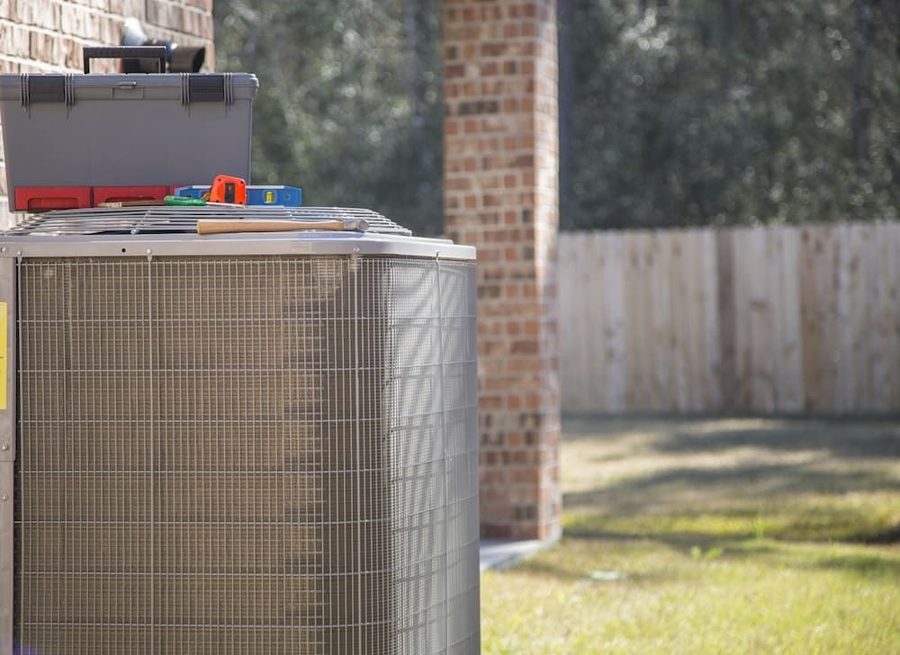
The outdoor condenser unit sits exposed to the Buffalo elements year-round. High humidity accelerates the oxidation of the delicate aluminum fins surrounding the compressor.
As the aluminum oxidizes, it develops a white, powdery rust film. This corrosion causes the paper-thin fins to become brittle, warp, and crumble away under minor pressure. When the fins degrade, the unit loses its ability to shed heat into the outdoor atmosphere, forcing the compressor pump to operate at much higher temperatures and draw excessive amperage from your electrical panel.
How Regional Moisture Destroys Heating Components
Many homeowners assume that summer humidity only impacts their air conditioning equipment. In reality, the lake effect aging process can permanently compromise your gas furnace long before winter returns.
The Attack on the Heat Exchanger
The heat exchanger is the central metal chamber where gas burns to create warmth for your home. During the summer, when your air conditioner runs continuously, the air inside your furnace cabinet becomes cold and damp.
This cold metal acts like a magnet for the ambient humidity. Moisture condenses on the exterior walls of the steel heat exchanger, collecting in the tight bends and welded seams. Because steel reacts aggressively to water and oxygen, rust begins to form. Over several summers of unmanaged moisture exposure, this rust eats deep into the metal walls, creating structural cracks that can leak lethal carbon monoxide gas into your living spaces when the furnace ignites in November.
Electrical Component Failure
High relative humidity is a direct threat to the electronic controls that manage your system. Moisture can settle over the primary integrated furnace control board, causing corrosion along the copper circuit tracks and terminal pins. This oxidation creates high electrical resistance, leading to erratic system behavior, false error codes, and sudden component short circuits that can leave you stranded without heat during a winter freeze.
Visual Warning Signs Your System Is Overworking
You do not need specialized tools to determine if the lake effect aging process is taking a toll on your property’s infrastructure. Your equipment drops clear physical clues.
-
White or Green Crusting on Copper Lines: Inspect the copper refrigerant lines where they enter your home. If you notice a thick, chalky white or greenish crust around the valves, active oxidation is occurring.
-
Rust Streaks on the Furnace Cabinet: Look closely at the base of your indoor air handler or furnace. Red, orange, or brown rust streaks trailing down the metal panel doors indicate internal water pooling.
-
A Damp, Earthy Odor in the Vents: If the air emerging from your supply registers smells musty or like a damp towel, moisture is trapped inside your duct network or drain pan.
-
Frequent Component Short-Cycling: If your air conditioner turns on and off rapidly every ten minutes, it is struggling to handle the ambient moisture load.
Professional Protective Steps that Restore Balance
To halt the lake effect aging process and protect your mechanical investments, you must take a systematic approach to moisture management. At Roy’s Plumbing, Heating, Cooling & Electrical, we utilize advanced technical solutions to secure your home.
1. Comprehensive Whole-Home Dehumidifiers
The most effective way to protect both your HVAC system and your home’s structural framing is by installing a dedicated whole-home dehumidifier directly into your existing air ducts.
This device works in tandem with your thermostat, monitoring relative humidity independently. It pulls damp air from your rooms, extracts the excess water volume efficiently, and sends dry air back into circulation. Taking the moisture-removal burden completely off your primary air conditioner allows your cooling system to run shorter, more efficient cycles, extending its lifespan significantly.
2. Specialized Chemical Coil Coatings
During our comprehensive spring tune-up visits, our technicians can apply professional, marine-grade protective coatings to your condenser and evaporator coils. These thin, non-insulating polymers create a hydrophobic barrier that forces moisture to slide off the metal surfaces instantly without collecting in seams or triggering galvanic corrosion.
Defend Your Home Grid Against the Elements
The lake effect aging process is a powerful environmental reality in Buffalo, but it does not have to compromise your home comfort systems or drain your budget through sudden equipment failures. By taking a proactive approach to humidity control and scheduling regular professional maintenance, you can shield your pipes, coils, and electrical circuits from premature corrosion.
Don’t wait for a complete system breakdown to evaluate your equipment health. Contact Roy’s Plumbing, Heating, Cooling & Electrical today to schedule a cooling tune-up and indoor moisture audit with our local specialists. Let our family serve yours, delivering the reliable, high-quality, and honest solutions that keep your home performing flawlessly through every season.
Recent News
Before the First Freeze: How to Prepare Your Buffalo Heat Pump for Winter
What Does a Buzzing Circuit Breaker Mean?
6 Signs Your Ductwork May Be Leaking
How To Keep Critters Out Of Your Home’s Vent Opening
How To Tell If Your Toilet’s Wax Ring is Leaking
Do Heat Pumps Work Well in Older Buffalo Homes?
Why Older Buffalo Homes Often Need Electrical Panel Upgrades
Get in Touch