$350 OFF a Tankless Water Heater Browse All Current Offers & Save Today


Back to Blog
Why Older Buffalo Homes Often Need Electrical Panel Upgrades
Buffalo is famous for its architectural charm. From historic Victorians and Craftsman bungalows in Elmwood Village and North Buffalo to classic colonials across Amherst and Tonawanda, our region’s historic homes possess character that modern developments simply cannot replicate. However, behind those gorgeous plaster walls, stained-glass accents, and hardwood trim lies an unseen infrastructure challenge: outdated electrical wiring.
When these homes were built in the early-to-mid 20th century, a typical family powered little more than a few light bulbs, a radio, and perhaps a refrigerator. Today, a modern Buffalo household powers central air conditioning, induction cooktops, high-efficiency heat pumps, home theater setups, smart appliances, and Level 2 electric vehicle (EV) chargers. Roy’s Plumbing, Heating, Cooling & Electrical has been keeping Western New York homes safe, comfortable, and up to code since 1973. This practical guide breaks down why older Buffalo homes frequently require electrical panel upgrades, the safety hazards of legacy systems, and how to modernize your property safely.
The Amperage Gap: 60-Amp vs. Modern 200-Amp Demand
An electrical panel acts as the main distribution hub for your home, dividing incoming power from National Grid or NYSEG into individual circuits. Electrical panels are rated by their total current-carrying capacity, measured in amperes (amps).
1. The 60-Amp to 100-Amp Legacy
If your Buffalo home was built before 1970 and has not undergone a main panel overhaul, it likely operates on a 60-amp or 100-amp service line. While 100 amps was acceptable in the 1980s, it falls dangerously short today. A single 240-volt Level 2 EV charger or central air conditioning compressor can draw 40 to 50 amps on its own, instantly consuming half or more of your home’s entire electrical capacity.
2. The 200-Amp Modern Gold Standard
Today, a 200-amp main service panel is the national standard for modern single-family residences. Upgrading to 200-amp service provides the physical bus bar space and electrical headroom required to run multiple heavy-draw appliances simultaneously without overloading your system or causing voltage drops.
4 Danger Signs in Older Buffalo Electrical Systems
Older homes will give clear physical and operational indicators when their electrical infrastructure is pushed past its safe operational limits.
1. Flickering or Dimming Lights
If your dining room lights momentarily flicker or dim whenever your refrigerator compressor kicks on or your microwave starts, your electrical panel is experiencing a localized voltage drop due to a sudden current surge.
2. Frequently Tripped Breakers or Blown Fuses
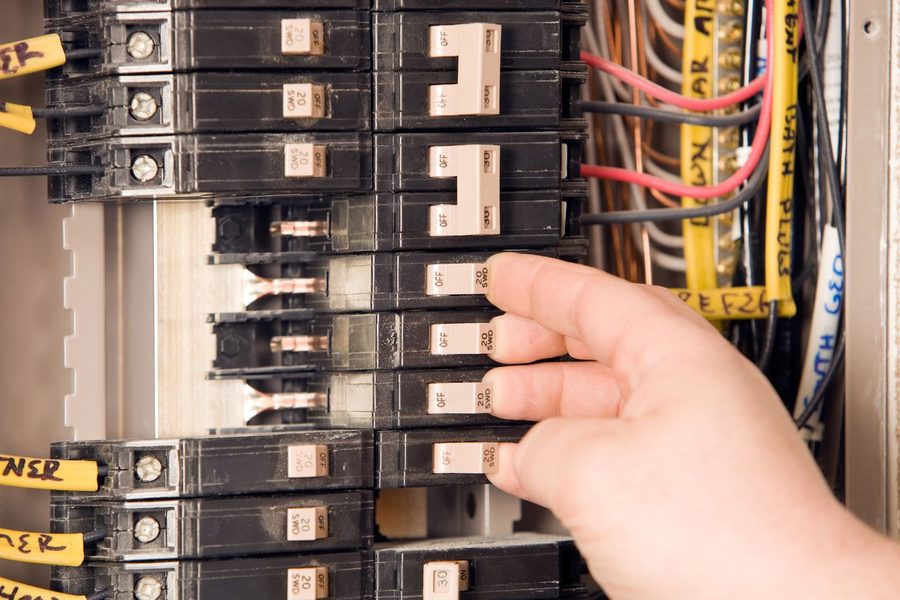
Circuit breakers are engineered safety devices designed to cut power before copper wiring overheats. If you regularly reset breakers when running a hair dryer and a space heater at the same time, your circuits are severely overloaded.
3. Outdated Fuse Boxes with Screw-In Glass Fuses
Many historic Buffalo homes still contain original screw-in glass fuse boxes. While fuses were effective in their era, they lack modern Arc-Fault Circuit Interrupter (AFCI) and Ground-Fault Circuit Interrupter (GFCI) capabilities required by modern National Electrical Code (NEC) standards, leaving your home vulnerable to electrical fires.
4. Overheated Panels and Burning Odors
Walk over to your breaker box during a high-usage time. The metal door should feel cool to the touch. If the panel feels warm, smells like hot plastic or scorched rubber, or makes a faint buzzing sound, internal connections are actively arcing and overheating.
High-Risk Legacy Panels to Replace Immediately
In addition to capacity limitations, certain brands of older electrical panels installed across Western New York between 1950 and 1990 possess known mechanical design defects.
-
Federal Pacific Electric (FPE) Stab-Lok Panels: FPE panels are notorious for manufacturing defects that prevent breakers from tripping during a short circuit or thermal overload. Most insurance companies in New York state will refuse to write or renew a homeowner policy if an active FPE panel is present.
-
Zinsco and GTE-Sylvania Panels: Zinsco panels feature aluminum bus bars that corrode easily. Over time, the breakers melt and fuse directly to the bus bar, making it impossible for the breaker to trip during an overload.
-
Knob-and-Tube Wiring Connections: Many older homes in Buffalo still contain active or partially abandoned Knob-and-Tube (K&T) wiring. Connecting modern high-draw appliances to ungrounded K&T wiring via an outdated panel creates an immediate fire hazard.
The Upgrade Process: What to Expect
Upgrading your electrical panel is a precise, regulated project that requires coordination between licensed electricians, local municipal inspectors, and your utility company (National Grid or NYSEG).
-
NEC Article 220 Load Calculation: A licensed electrician evaluates your home’s total square footage, heating/cooling systems, and major appliance draws to determine the exact amperage service required.
-
Permitting and Code Compliance: Your electrician pulls necessary permits with the City of Buffalo, Amherst, or surrounding town building departments.
-
Heavy-Up Panel Installation: The electrician installs a modern 200-amp main breaker box, new copper bus bars, updated grounding electrode systems, and AFCI/GFCI breakers.
-
Utility Coordination and Inspection: National Grid connects new, heavy-duty service entrance cables from the utility pole to your home’s exterior meter pan following a passed municipal inspection.
Trust the Licensed Specialists at Roy’s
Upgrading your electrical panel is one of the most effective ways to safeguard your home against electrical fires, prepare your property for modern green-energy technology, and preserve its resale value.
While minor household tasks like replacing a light fixture can be simple DIY projects, upgrading a main service panel involves high-voltage utility power and strict municipal code compliance that demands master-level trade expertise.
Protect your home and family today. Contact Roy’s for your electrical panel upgrade!
Recent News
How To Keep Critters Out Of Your Home’s Vent Opening
How To Tell If Your Toilet’s Wax Ring is Leaking
Do Heat Pumps Work Well in Older Buffalo Homes?
When a Slow Drain Signals a Sewer Line Problem in Buffalo Homes
The ‘Lake Effect’ Aging Process: How Buffalo Humidity Corrodes Your HVAC System
The Hidden Dangers of Older Buffalo Plumbing: When to Move Beyond the Quick Fix
Why Spring Is the Best Time to Install a Heat Pump in Buffalo
Get in Touch